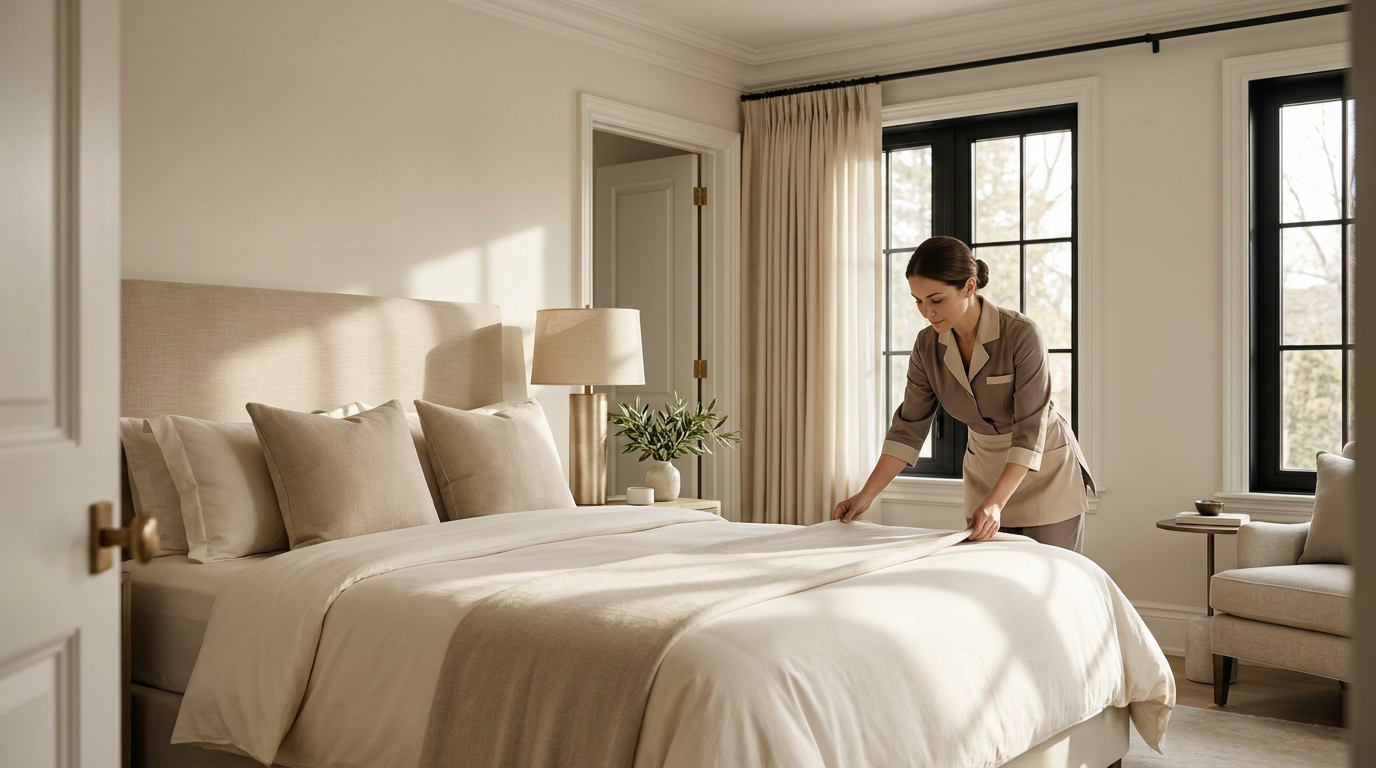
The Evolution of Private Staffing in the Modern Household
There was a time when private service was largely invisible. The great houses of Europe, the residences of industrial families and the estates of landed households operated according to systems that remained largely unchanged for generations. Staff entered through separate doors. Hierarchies were clearly defined. Duties were precise. Careers often lasted decades.
While society transformed around them, many private households continued to operate according to traditions established in another era. Today, that world still exists in certain forms. Yet the reality of modern private staffing has evolved far beyond its historical foundations.
The contemporary household bears little resemblance to the households of the past. Principals travel globally. Families maintain residences across multiple countries. Children are educated internationally. Family offices oversee complex personal and business interests. Security, technology, hospitality and lifestyle management increasingly intersect within the home.
As households have become more sophisticated, so too have the professionals who support them. Private staffing is no longer merely a domestic function. It has become a specialised profession.
From Domestic Service to Household Operations
Historically, private service was defined by clearly separated roles. A butler supervised formal service. A housekeeper maintained the residence. A nanny cared for the children. A cook prepared meals. An estate manager oversaw the grounds. The structure was often rigid but effective.
The modern household, however, operates differently. Many residences today function as dynamic environments requiring flexibility, communication and operational oversight.
A house manager may coordinate contractors, oversee budgets, supervise household professionals, manage inventories and liaise with family office representatives. A nanny may support educational planning, international travel and multilingual development. A butler may act as a host, coordinator and trusted operational presence within the residence.
The lines between hospitality, administration and household management have become increasingly interconnected. Modern private staffing is less about performing isolated tasks and more about ensuring the seamless operation of an entire living environment.
The Internationalisation of Private Households
One of the defining characteristics of contemporary private service is its increasingly global nature. Families are more mobile than ever before.
A principal may spend spring in London, summer in the Mediterranean, autumn in Hong Kong and winter in Dubai. Children may attend boarding schools in Switzerland while maintaining close ties to homes across several continents. Residences are no longer singular locations. They are often part of a broader international lifestyle.
This shift has fundamentally changed recruitment requirements. Experience within a single market is often no longer sufficient. Household professionals are increasingly expected to navigate diverse cultural environments, varying service expectations and international travel schedules with confidence and discretion.
Multilingual capabilities, cultural intelligence and adaptability have become highly valued attributes. In many respects, household professionals now operate within global environments similar to those experienced by senior executives.
The Rise of the Household Professional
Language matters. The terminology used within private staffing has gradually evolved to reflect changing expectations. Historically, domestic roles were often perceived as functional positions. Today, leading households increasingly view these roles as professional disciplines requiring specialised expertise.
The term household professional has gained prominence because it more accurately reflects the skills involved. Exceptional private service requires far more than technical competence. It demands judgement. Emotional intelligence. Situational awareness. Professional boundaries. Discretion. Anticipation. The ability to adapt seamlessly to changing circumstances.
A highly skilled house manager may oversee operational budgets equivalent to those of a small business. A nanny may influence a child's development during formative years. A butler may become one of the most trusted individuals within a principal's private environment. The responsibilities associated with these roles carry significant weight. The language used to describe them should reflect that reality.
Family Offices and the Professionalisation of Household Staffing
Perhaps no development has influenced private staffing more than the rise of the family office. As family offices have become increasingly sophisticated, expectations surrounding household operations have evolved accordingly.
Many family offices now view residences as managed assets requiring oversight, accountability and long-term planning. Household staffing decisions are therefore increasingly approached with the same strategic mindset applied to other areas of wealth management.
Questions that once appeared unusual within domestic environments have become commonplace. How should household reporting structures be organised? What systems ensure continuity during staff transitions? How can operational standards be maintained across multiple residences? What training should household professionals receive? How should performance be evaluated?
These conversations reflect a broader shift. Private households are increasingly being managed with professional rigour while preserving the personal warmth that defines exceptional homes.
Technology Has Changed Expectations
Technology has transformed nearly every aspect of private life. Private households are no exception. Smart home systems, integrated security platforms, digital inventories and remote property monitoring have become commonplace within many luxury residences.
Yet technology has not reduced the need for household professionals. If anything, it has elevated expectations. Household staff are increasingly expected to navigate sophisticated residential technologies while maintaining seamless service standards.
The modern house manager may coordinate everything from access control systems to sustainability initiatives. An estate manager may oversee multiple properties through digital platforms. A private assistant may coordinate international travel, household logistics and personal scheduling through integrated systems. Technology has become a tool rather than a replacement. The human element remains central.
The Growing Importance of Training
One of the most significant changes within private staffing has been the growing emphasis on professional development. Historically, many household skills were learned through apprenticeship and experience. While experience remains invaluable, structured training is increasingly becoming an expectation rather than an exception.
The world's leading households now place greater emphasis on service standards, childcare excellence, health and safety, first aid and CPR, confidentiality, household systems, cultural awareness and professional communication.
Training creates consistency. It also creates confidence. For principals, it provides reassurance that household professionals can operate effectively within complex environments. For staff, it offers career development and long-term opportunities.
The private service industry is gradually following a path similar to luxury hospitality, where professional standards and ongoing development are recognised as essential components of excellence.
The New Expectations of Principals
Affluent households today often seek qualities that extend beyond traditional technical skills. The modern principal frequently values discretion more than visibility. Initiative more than instruction. Adaptability more than routine.
The most successful household professionals are often those who understand how to create calm within complex environments. They recognise patterns. They solve problems quietly. They understand that true luxury is often experienced through absence rather than presence.
A forgotten task becomes noticeable. A flawlessly managed household does not. This subtle distinction lies at the heart of exceptional private service.
Why Human Skills Are Becoming More Valuable
As automation continues to advance, certain human qualities are becoming increasingly difficult to replicate. Artificial intelligence can organise information. Smart systems can automate processes. Technology can improve efficiency. Yet it cannot replace intuition. It cannot read a room. It cannot anticipate a family's emotional needs. It cannot understand the unspoken dynamics that often define private households.
The future of private staffing will therefore likely place even greater emphasis on qualities that remain uniquely human. Empathy. Trustworthiness. Judgement. Discretion. Emotional intelligence. These qualities have always been valuable. They may become even more important in the years ahead.
A Profession Entering a New Era
Private staffing is undergoing a quiet transformation. What was once viewed primarily as domestic service is increasingly recognised as a sophisticated profession requiring expertise, adaptability and professionalism.
Across London, Hong Kong, Dubai, Singapore and other global centres of wealth, a new generation of household professionals is emerging. They combine traditional service values with modern operational capabilities. They understand both discretion and efficiency. They are equally comfortable navigating family dynamics and sophisticated household systems.
Most importantly, they recognise that exceptional service is not defined by visibility. It is defined by trust. And trust, as ever, remains the foundation upon which every successful household is built.

Why Savoir Vivre Became Royal Maison International
The story behind the evolution from Savoir Vivre to Royal Maison International and what it reveals about the future of private staffing.
The Invisible Side of Family Offices
Behind every sophisticated family office lies a household ecosystem built on trust, discretion and exceptional people.

The Day After the Hire
Why the success of a household depends on more than recruitment, and what happens after the right hire is made.
Royal Maison International is the evolution of Savoir Vivre, serving private households, family offices and international principals worldwide.
Learn more:
- Royal Maison Dubai → royal-maison.com
- Maisonette Hong Kong → maisonette.global