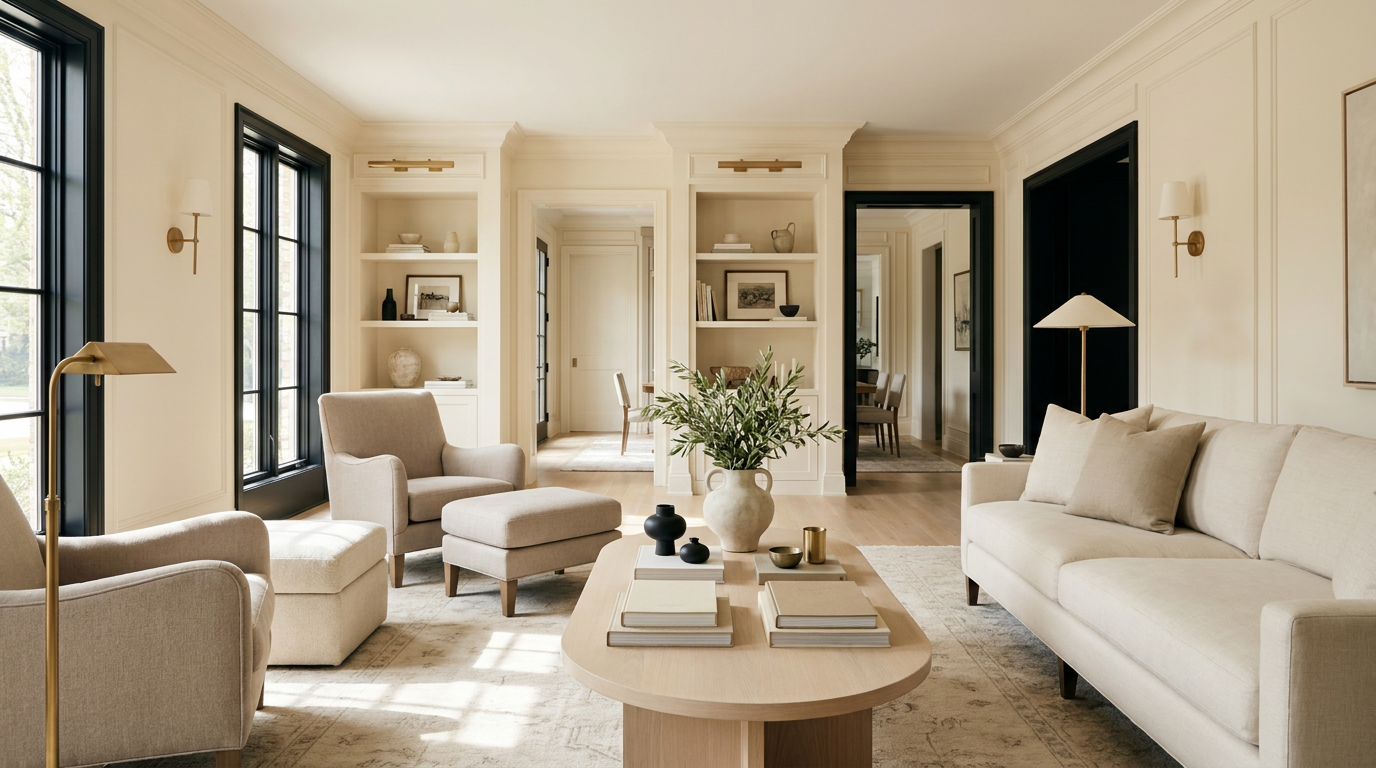
The Quiet Architecture of Service
There is a moment that occurs in every truly exceptional home. Guests arrive. The atmosphere feels effortless. The lighting is perfect. Fresh flowers appear precisely where they should. A favourite tea arrives without being requested. Children move comfortably through the space. Luggage has already been unpacked. Dinner unfolds naturally.
Nothing feels orchestrated. Yet everything has been.
The finest private residences share a common characteristic that is often overlooked. Their success is rarely the result of architecture alone. Marble, craftsmanship and celebrated designers can create beauty. They cannot create ease.
That distinction belongs to something far less visible. Service. Not service in the traditional sense of tasks being completed, but service as an operating philosophy. A carefully structured framework of people, systems, routines and standards working together to create an environment that feels calm, seamless and deeply personal.
Like the hidden framework supporting a great building, exceptional service is often invisible when functioning well. And yet it is precisely this invisible structure that determines whether a household merely looks beautiful or genuinely lives beautifully.
The House Beyond Its Walls
Much of contemporary luxury remains focused on physical space. Architects design residences that push technical boundaries. Interior designers create remarkable environments. Developers market increasingly sophisticated amenities.
Yet many homeowners discover a surprising reality after moving into extraordinary properties. A house is not the same thing as a household. One can be purchased. The other must be built.
The distinction becomes particularly evident within large residences, family estates and multi-property portfolios. A property may be architecturally flawless. Yet if schedules are chaotic, maintenance is reactive, communication is fragmented and household responsibilities remain unclear, daily life quickly becomes complicated.
Conversely, some of the world's most admired homes achieve their atmosphere not through excess, but through operational harmony. Everything works. Everyone understands their role. The household functions as a coherent whole. The architecture may attract attention. The service sustains the experience.
The Invisible Layer of Luxury
Luxury is often misunderstood. Popular culture tends to associate luxury with visible markers of wealth: rare materials, collector pieces, bespoke finishes and exceptional locations. While these certainly play a role, the most sophisticated households increasingly define luxury differently.
Luxury becomes the absence of friction. A flight is rearranged before a problem emerges. A child's schedule is coordinated without requiring parental intervention. Seasonal wardrobes appear in the correct residence at precisely the right moment. Guests are anticipated. Preferences are remembered. Problems are resolved quietly before they become visible.
These experiences are rarely accidental. They are created by what might be described as the invisible layer of luxury. A layer composed not of objects, but of people. House managers. Butlers. Executive housekeepers. Estate managers. Personal assistants. Nannies. Household professionals whose contribution is often measured not by what they do, but by what never goes wrong.
Why Great Households Resemble Great Hotels
There is a reason many leading private households recruit from luxury hospitality environments. The world's finest hotels understand something fundamental. Guests remember how a place made them feel. Not simply how it looked.
A beautifully designed hotel that functions poorly will ultimately disappoint. A beautifully designed residence operates according to the same principle. The objective is not merely aesthetics. It is experience.
This does not mean private households should resemble hotels. Quite the opposite. The best household professionals understand how to deliver extraordinary standards while preserving warmth, privacy and individuality. The goal is never institutional perfection. It is personal comfort.
Nevertheless, many of the principles overlap. Consistency. Anticipation. Attention to detail. Professional standards. Operational discipline. These are qualities shared by exceptional hospitality environments and exceptional private residences alike.
The Role of Household Leadership
As households become increasingly complex, leadership has become one of the defining characteristics of successful domestic environments. Historically, household structures were often governed by tradition. Today, they require management.
This is particularly true for international families maintaining multiple residences. A household team may include house managers, executive housekeepers, nannies, private chefs, chauffeurs, estate managers, personal assistants, security personnel and external contractors.
Without clear leadership, even highly capable individuals can struggle to operate effectively together. The role of the modern house manager has therefore evolved significantly. Increasingly, house managers function as operational directors of private households.
They coordinate people, systems, budgets, projects and service standards. Their work often extends far beyond traditional domestic responsibilities. The best create alignment. They ensure that everyone within the household ecosystem moves in the same direction.
The Importance of Ritual
One of the least discussed aspects of exceptional service is the role of ritual. Every successful household develops rhythms. These rhythms are rarely documented in formal manuals. They emerge through observation and understanding.
A family's preferred breakfast routine. The way guests are welcomed. How holidays are celebrated. The atmosphere surrounding children's return from school. The preparation of a residence before principals arrive from travel. These seemingly small details often define the emotional character of a home.
The most accomplished household professionals understand this intuitively. They recognise that service is not simply about efficiency. It is about preserving continuity. Families evolve. Children grow. Residences change. Yet certain rituals create stability across decades. They become part of the household's identity.
Multi-Residence Living and the Need for Consistency
Increasingly, affluent families live across multiple homes. A principal may divide time between London, Dubai, Hong Kong, Geneva or New York. While these residences may differ architecturally, families often seek consistency in experience.
The challenge is considerable. Different properties. Different teams. Different suppliers. Different cultural environments. And yet the expectation remains unchanged. The household should feel familiar.
This is where service architecture becomes particularly important. The most sophisticated households establish systems that transcend geography. Standards are documented. Processes are understood. Communication remains consistent. Information flows seamlessly between locations. The result is a unified household experience, regardless of where in the world the family happens to be.
Technology Cannot Replace Presence
Technology has transformed household management. Inventory systems, security platforms, digital calendars and smart home controls have introduced extraordinary efficiencies. Yet technology alone cannot create hospitality. Nor can it create trust.
The finest household professionals continue to provide something fundamentally human. Judgement. Sensitivity. Observation. Emotional intelligence.
A well-programmed smart home may adjust the lighting. An experienced house manager notices when a principal has had a difficult day. A digital calendar may coordinate schedules. A skilled nanny understands when a child requires reassurance. These distinctions matter. Particularly within private environments where relationships often develop over many years. Technology enhances service. It does not replace it.
The Structure Nobody Sees
When people admire a remarkable residence, they often notice the architecture first. The proportions. The materials. The furnishings. The craftsmanship.
What they rarely see is the framework operating quietly beneath the surface. The systems. The routines. The standards. The people. The countless decisions made each day to preserve comfort, continuity and calm.
This is the quiet architecture of service. It does not appear in floor plans. It cannot be photographed. Yet it is often the defining characteristic separating a beautiful house from an exceptional home. And in the world's most sophisticated households, it remains the most valuable architecture of all.
The Evolution of Private Staffing in the Modern Household
How private staffing has evolved from traditional domestic service into a sophisticated profession supporting modern international households.
The Day After the Hire
Why the success of a household depends on more than recruitment, and what happens after the right hire is made.
The Invisible Side of Family Offices
Behind every sophisticated family office lies a household ecosystem built on trust, discretion and exceptional people.
Royal Maison International is the evolution of Savoir Vivre, serving private households, family offices and international principals worldwide.
Learn more:
- Royal Maison Dubai → royal-maison.com
- Maisonette Hong Kong → maisonette.global