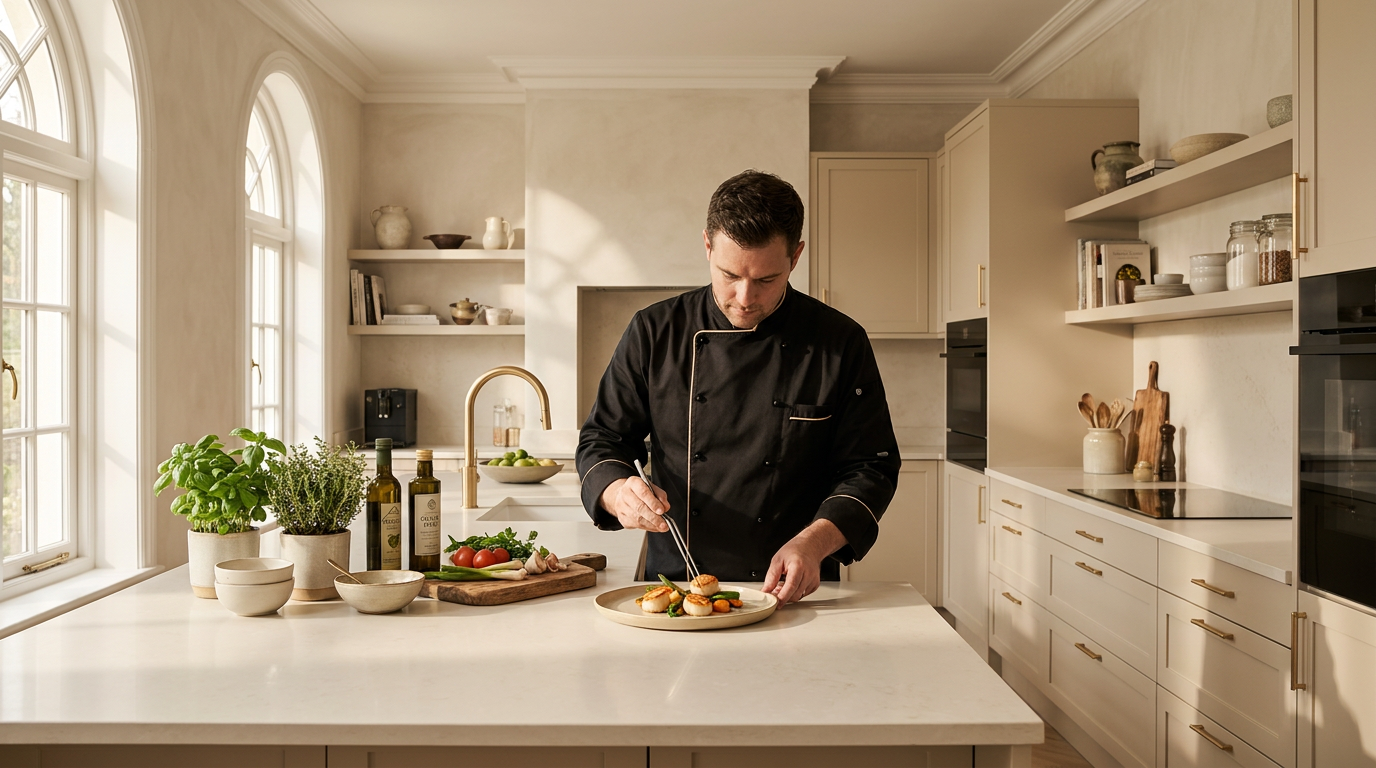
The Future of Household Staffing in Asia
A quiet transformation is taking place behind the doors of Asia's most sophisticated homes. It is not being driven by architecture, although remarkable residences continue to emerge across the region. Nor is it purely a consequence of rising wealth, despite the extraordinary economic growth that has reshaped cities from Hong Kong and Singapore to Bangkok, Seoul and beyond.
The change is more subtle. It concerns the way families live. The way households operate. The expectations placed upon private service. And the role household professionals increasingly play within modern family life.
For decades, discussions surrounding wealth in Asia focused largely on business growth, entrepreneurship and investment. Attention was directed outward, towards markets, industries and expansion. Today, a different conversation is emerging.
Families are becoming increasingly intentional about the environments they create at home. Not simply the homes themselves. But the experience of living within them. As a result, household staffing across Asia is entering a new chapter. One defined not by tradition alone, but by professionalism, training and a growing appreciation for the value of exceptional private service.
The Rise of the International Asian Household
One of the defining characteristics of modern Asia is its global outlook. Many affluent families now operate across multiple countries simultaneously.
A business headquartered in Hong Kong. Investments in Singapore. Children educated in London. Property portfolios extending into Europe, the Middle East and North America.
The household has inevitably evolved alongside this reality. Today's family may spend significant portions of the year in different cities. They may relocate temporarily for education, business or lifestyle reasons. Their support structures must therefore be capable of adapting to a highly mobile existence.
This has altered the profile of household professionals being sought throughout the region. Experience within a single environment is often no longer enough. Families increasingly value adaptability, cultural intelligence, language skills and the ability to operate confidently across international settings. The future of household staffing in Asia is becoming increasingly global.
A Generation with Different Expectations
The next generation of affluent families often approaches private service differently from their parents. Historically, domestic staffing arrangements were frequently shaped by tradition. Roles were clearly defined. Responsibilities remained largely unchanged. Household structures followed familiar patterns.
Many younger principals, however, have grown up within highly international environments. They have studied abroad. Worked across different markets. Experienced luxury hospitality at the highest levels.
Their expectations are therefore evolving. Professionalism is often valued as highly as experience. Training matters. Communication matters. Cultural fit matters. They seek household professionals who can integrate seamlessly into modern family life while maintaining the discretion and standards traditionally associated with private service. This shift is influencing recruitment decisions throughout Asia.
Why Hong Kong Remains Important
Few cities illustrate this transformation more clearly than Hong Kong. For generations, the city has served as a gateway between East and West. Its residents have long embraced international lifestyles while maintaining strong regional connections.
Today, Hong Kong continues to attract entrepreneurs, family offices, executives and globally mobile families who require exceptional support within increasingly demanding lives. Yet the city's residential landscape is changing. Households are becoming more sophisticated. Service expectations are rising.
Many families seek flexibility alongside professionalism. They value continuity, accountability and training. Increasingly, they are looking beyond traditional staffing models towards more structured approaches to household management. This trend is likely to accelerate in the coming years.
Singapore and the Professionalisation of Service
Singapore offers another fascinating perspective. The city-state has become one of the world's most significant centres for family offices and international wealth.
As family offices have expanded, expectations surrounding household operations have naturally evolved alongside them. Many households now apply the same standards of professionalism to domestic environments that they apply to business operations.
Recruitment processes are becoming more rigorous. Training is receiving greater attention. Household management is increasingly viewed as a specialised discipline rather than a purely administrative function. This reflects a broader trend visible throughout the region. Private service is becoming more professionalised. And households are benefiting as a result.
The Influence of Luxury Hospitality
Perhaps one of the most important influences shaping household staffing in Asia today comes from an unexpected source. Luxury hospitality.
Across the region, affluent families have become accustomed to exceptional service experiences within the world's leading hotels, private clubs and resorts. These experiences inevitably influence expectations at home. Not because families wish to replicate hotel environments. But because they appreciate consistency, anticipation and professionalism.
The qualities that define outstanding hospitality increasingly overlap with those that define outstanding household service. Attention to detail. Discretion. Warmth. Operational excellence. The ability to create ease without drawing attention to the effort involved. These standards are becoming increasingly influential within private residences throughout Asia.
Childcare Is Evolving
One of the most significant changes within household staffing concerns childcare. Parents today often seek considerably more than supervision alone. Educational support. Emotional development. Language exposure. Structured activities. International awareness.
These priorities have elevated expectations surrounding nannies and childcare professionals. Families increasingly view childcare as an investment in long-term development.
As a result, recruitment standards are becoming more sophisticated. Qualifications matter. Training matters. Character matters. The role itself is evolving into a highly respected professional discipline.
The Return of Training
For many years, household staffing relied heavily upon experience. While experience remains essential, a growing emphasis is now being placed upon formal training.
This is particularly visible among households seeking consistency across multiple residences or larger staffing structures. Training provides common standards. Common language. Common expectations.
It creates confidence for principals and career development opportunities for household professionals. The future of domestic staffing in Asia will likely place far greater emphasis on ongoing professional development than previous generations experienced.
Technology Changes Everything — And Nothing
Technology is reshaping private households throughout Asia. Smart residences are becoming increasingly common. Security systems are more sophisticated. Household management platforms continue to evolve. Communication is instantaneous.
Yet despite these developments, the qualities most valued by affluent families remain surprisingly consistent. Trust. Judgement. Reliability. Discretion. Kindness.
Technology can streamline operations. It cannot replace human presence. Nor can it replicate the emotional intelligence required within private households. This reality remains unchanged.
Beyond Staffing
The future of household staffing in Asia is not ultimately about staffing at all. It is about lifestyle. About creating environments that support increasingly complex lives. About helping families preserve time, privacy and continuity. About recognising that exceptional households do not happen accidentally. They are created intentionally. Supported by people whose contribution often remains invisible.
As Asia continues to redefine global wealth, its households are quietly evolving as well. More professional. More international. More thoughtful. And increasingly aware that the true measure of a well-run home is not how impressive it appears from the outside. But how effortlessly life unfolds within it.
The Rise of Managed Households
Why affluent families are increasingly embracing managed household services and a new model of domestic excellence.
The Quiet Architecture of Service
How exceptional households are shaped not only by design, but by the invisible systems, people and standards that sustain them.
The Evolution of Private Staffing in the Modern Household
How private staffing has evolved from traditional domestic service into a sophisticated profession supporting modern international households.
Royal Maison International is the evolution of Savoir Vivre, serving private households, family offices and international principals worldwide.
Learn more:
- Royal Maison Dubai → royal-maison.com
- Maisonette Hong Kong → maisonette.global